Tuesday, April 2, 2019

Chanshegu Health Screening

Our last day in the city of Tamale was March 28th, which we spent in the small village of Chanshegu just outside of Tamale. Here, with the help of our friends: Mr. Amin, Kassim, and a team of nurses and midwives volunteering their time, we were able to set up a health screening day at their local clinic. UBCO has been working with the people of Chanshegu for the past ten years trying to set up a self sustaining health clinic within their village. This clinic has been funded almost entirely by our School of Nursing students, faculty and friends.  They have named it the Unity Community Health Centre
Unity Health Centre - Chanshegu
This year we received the amazing news that the clinic is now open Monday - Friday and being run by a team of fantastic local health care volunteers including nurses, nurse practitioners and midwives. The people of the community are now able to receive recurring health care on a daily basis. 

Cultural Dancers
To start our day off we first went to the Chief’s Palace (which is a round mud hut) to be greeted and welcomed by the village Chief. His welcome was warm and the horse in the corner of the Palace seemed friendly enough. We then headed to the clinic to get in touch with some Ghanaian culture by watching and participating in cultural dancing (don’t worry there’s video evidence). The simplicity of it all was pretty cool to see. No microphones or big speakers...just some drums, bells on the dancers feet and a little bit of passion made for an amazing performance that we all enjoyed. 

After the dancers had taught us some new moves and the sun was high up in the sky, we started setting up our health screening and consults. The process included registering each person to name, gender, approximate age and whether or not they had health insurance. We then sent them to our next stations to receive a height/weight and a blood pressure. Depending on their blood pressure and any health related complaints they had, we would decide whether or not to send them in for a consultation with Mr. Amin or another nurse. They would start treatment, medication prescriptions or specialist recommendations. Alongside this, we were also able to provide wound care and dressing changes for a variety of patients. There was also a station set up by midwives for antenatal care, and a station with a community health nurse who was taking care of routine child vaccinations. 
Registration Table

As the clinic is now open 5 days a week, clients are able to receive follow up care for frequent monitoring.   This is a major step in the evolution of the clinic.  Throughout the span of four hours we saw 103 community members of varying ages, gender, and health conditions. Thankfully we had Mr. Admin and his lovely team, Clifford and Kassim to work alongside us to help with translating, care, assessments and documentation for us. We couldn’t have done it without them! 

It was a great day filled with a lot of fun, collaboration, laughter and friendly faces.  I am always surprised to see the level of resilience in each of the individuals who live with so little but will always greet you with a smile. The appreciation for what they have or for what they receive is astonishing and something I’m sure we’ll never forget. 


The evening was capped off with a beautiful dinner for all of our volunteers at our favourite restaurant in Tamale called SWAD.   Dr. Marie Tarrant, the Director of our School of Nursing graciously covered the costs for all of us!   We were all very grateful.  

Thank you to the community of Chanshegu for welcoming us with such warm hearts and allowing us to aide in the small way that we could. Thanks again to Kassim, Mr. Amin and his team for making this all possible. 
Our Team!

Luke Dietz
4th year BSN student 
University of British Columbia Okanagan

Sunday, March 31, 2019

The Chaos of Tamale

Our two weeks spent in Tamale have now come to an end. When we first arrived here, I was overwhelmed by the differences between culture here compared to home. By the end of our stay in Tamale, I started to get more comfortable with these differences and settled into my new life and routine.
Busy Intersection Downtown

One of the most obvious differences I noticed when we first arrived in Tamale was the traffic. The main roads here are always busy; full of vehicles, motorbikes, cyclists, and pedestrians. Vehicles are often overflowing with people and the goods they are carrying. Cars pass each other frequently, with motorbikes constantly weaving in and out of traffic. 


Sheep on the Road
The chaos of downtown Tamale is compounded on market day, with people everywhere buying and selling things on the side of the road. In addition to all of the people and vehicles, there are goats, sheep, and chickens everywhere in Ghana. They wander the streets during the day and return to their homes at night.
In spite of the chaos, the Ghanaian people are incredibly friendly. Almost everybody you walk by on the street greets you and asks how you are. It is so beautiful to see how the people here interact with each other and how strong their sense of community is.
There are many more children in Ghana compared to at home. These children are very independent and they are cared for by the whole community. Many of the children are very happy to see us, but others get scared and it is likely that they have never seen a white person before.
In Ghana, time is a more fluid concept than it is in Canada. We call this 'Ghana time'. The expectations of when things will start and end here are more flexible and being late is not such a big problem. We went to church one day and part of the choir showed up after the service had started. While this may have been a big deal at home, in this case they just joined the rest of the choir and carried on. This really highlighted the concept of 'Ghana time' for me. 

A load from the market
Tamale is a very interesting blend of Ghanaian and Western influences. The markets and villages all feel Ghanaian, but there are some obvious Western components mixed in. For example, Tamale now has a KFC just down the road from the market. The juxtaposition of Ghana and the West is also evident in Ghanaian politics. Ghana has a president, a remnant of colonial history, but the country also has chiefs, elders, and spiritual leaders who hold a great deal of power and have been part of Ghanaian culture since before colonization. 

Daily life in Ghana has made me realize how much I take for granted at home. Here, I always have to think about the food and water that I am drinking and if it's safe to consume. I can't count the number of times I've reached for the tap when brushing my teeth, forgetting that I have to use bottled water instead. Water in Ghana is a resource that is not always readily available. The water tanks at our guest house in Tamale ran out sometimes, leaving us without the ability to shower. This predicament was made worse by the constant heat and sweat we experience here. 


Although life in Tamale was sometime overwhelming and difficult, I am so grateful that I have had this opportunity to experience life and culture in this beautiful place. 

Elyse Acheson 
4th Year BSN Student
University of British Columbia Okanagan

Tuesday, March 26, 2019

Labour and Delivery at TTH


Tamale Teaching Hospital
After reflecting upon our time at the Tamale Teaching Hospital, we are all grateful for this experience and opportunity for growth.  We entered into the labour and delivery ward excited and incredibly nervous at the prospect of such a different clinical surrounding. As soon as we started we were embraced by the staff and encouraged to be a part of the delivery process. We learned from the midwives and Ghanaian students as strong mothers gave birth.

On our second day we arrived and a sense of urgency was noted. Several mothers were in critical condition and required emergency
c-sections.  We were asked by the Obstetrician to join them in the operating room, known as the Theatre. We all felt a rush of emotions as we gowned up to enter. Once in the operating room a premature baby was delivered by  c-section and we assisted the team to resuscitate the newborn. After 15 mins the newborn was doing well and we were thrilled to see the recovery.  We passed the newborn off to the NICU staff and we were invited to enter the next operating room, where the scenario was repeated.  Another successful neonatal resuscitation.  Life is so precious.  Holding these small and fragile newborns and seeing them survive was a life changing moment for us. 

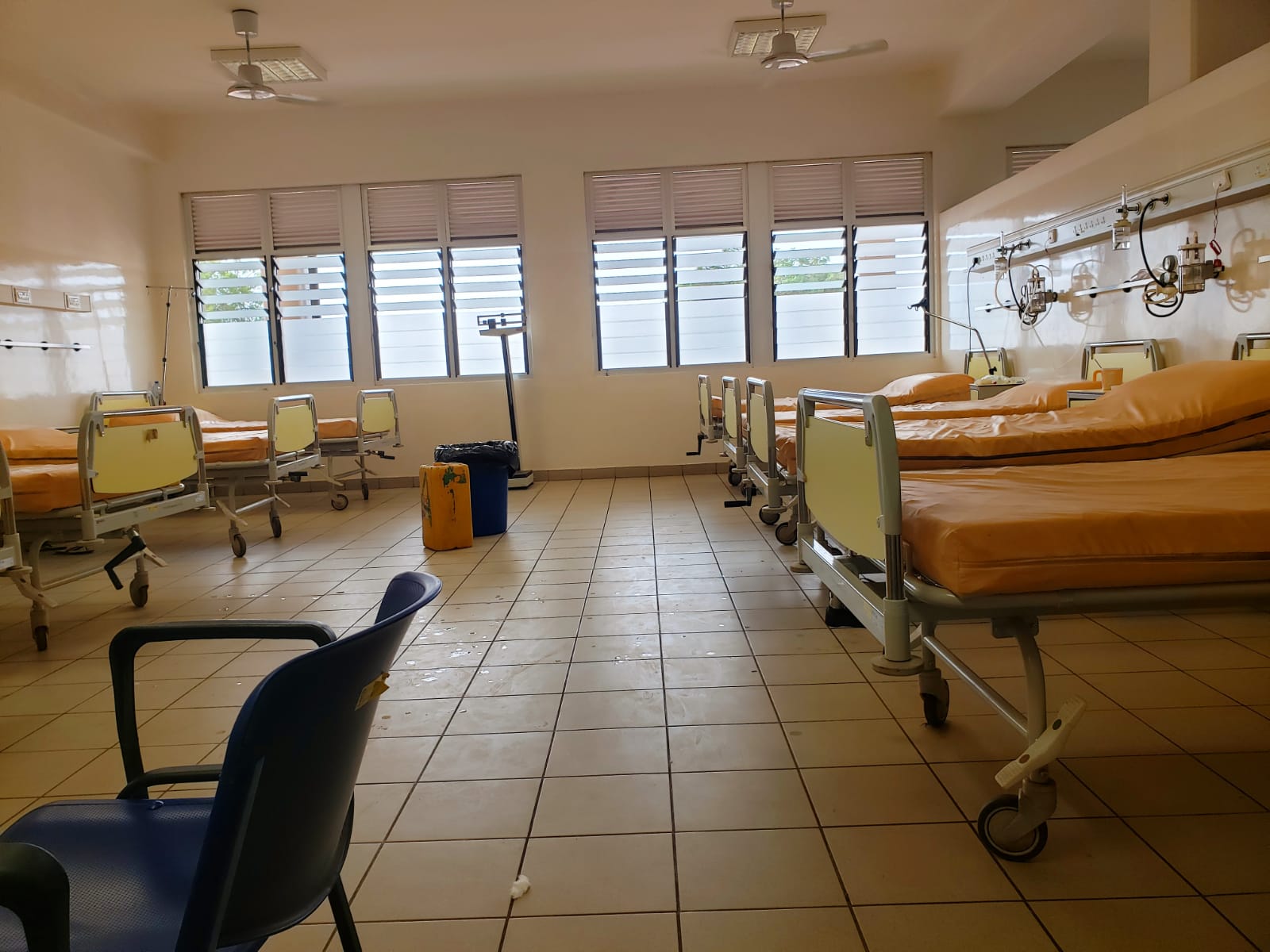
Labour and Delivery Ward
We are honoured to have had the privilege to be a part of this team.  The knowledge and resourcefulness of the interdisciplinary team left a lasting impression. We are thankful for this experience and the staff who took the time to teach and include us.


Oriana Monagas, Alyshia Coleman, and
Sophia Gray
4th Year BSN Students
University of British Columbia

Saturday, March 23, 2019

So Many Firsts.....


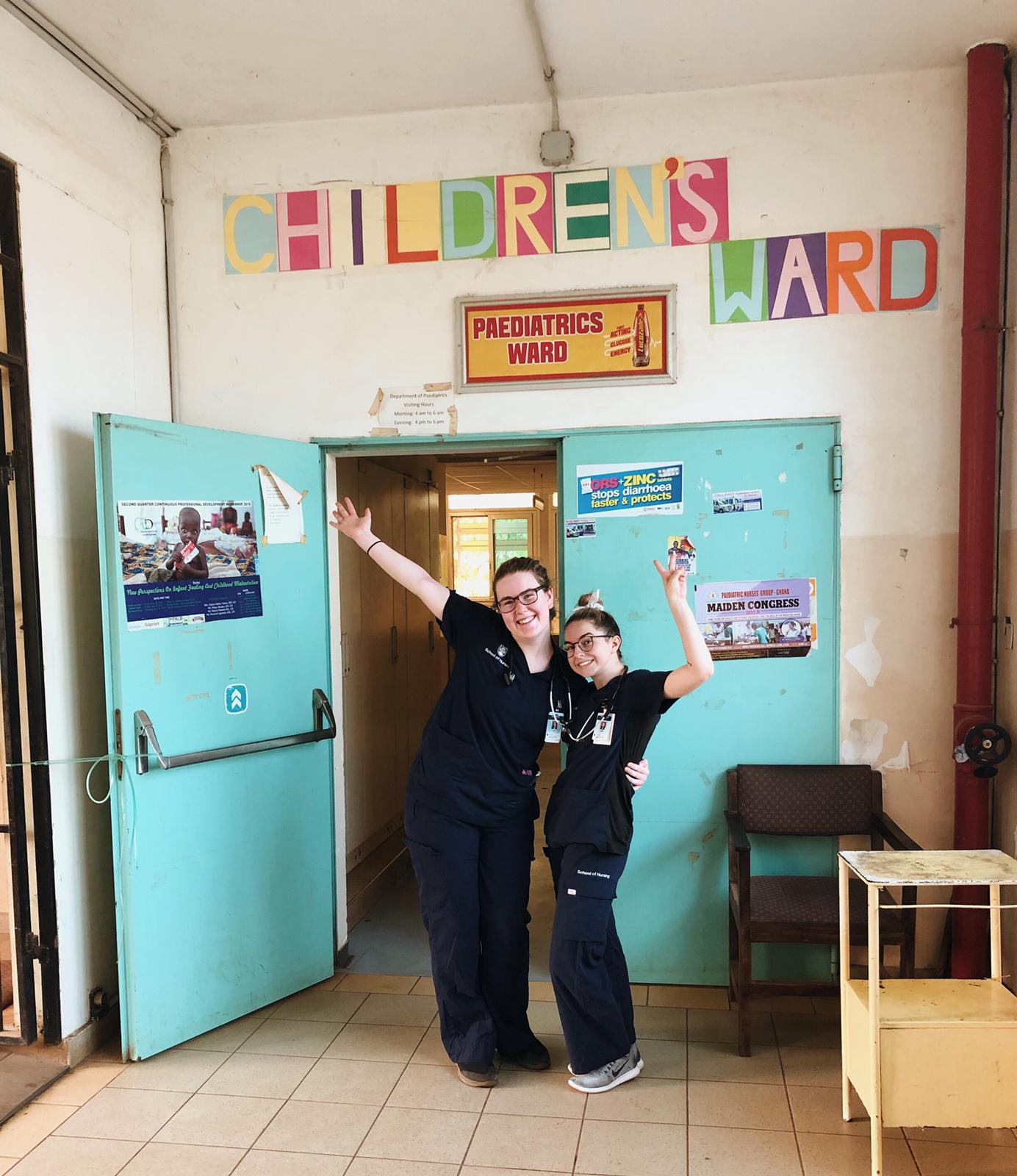
Pediatric Ward
During our first week in Tamale, we spent four days learning at the Tamale Teaching Hospital (TTH) on three separate floors; Accident & Emergency, Labour & Delivery, and lastly Pediatrics where we (Jill and Syd) spent our time. For Syd, working with children has always been her end goal so finally having the opportunity to work with kids was exciting!


Each day we began our morning eating a breakfast sandwich at Bakisu's followed by waving down tricycles (A.K.A Yellow Yellows) or taxis to TTH. One day, while waiting at the taxi stand, a car pulled over and asked if we wanted a ride.  Imagine our surprise when Jeanette spoke with him quickly and told us to get in.  Four of us loaded into his car, and as we pulled away from the taxi stand we found out he was one of the nurses on Pediatrics.  We'll admit we were a bit surprised when Jeanette offered us up....and then realized this was just another example of the genuine kindness of the people living within this country.
 
Bakisu and Jessica - Making our Breakfast
Completely outside of our comfort zone, what awaited us on the other side of those Pediatric unit doors was a whirlwind of mixed emotions.  Before we go any further into our experience, we would like to thank and make note of how wonderful and welcoming each and every single staff member was on the Pediatric unit. The students, nurses, physicians, and nutritionalists are just some of the incredible individuals that work beautifully within this environment to care for and save the lives of children every waking day. 

With the help of two unbelievable nurses, A.A and Osman, we were able to assist and get to know a number of patients and their families who were all admitted for a multitude of reasons. We spent a majority of our time on the East wing of the Pediatric ward which consisted of critical care, malaria, sepsis, meningitis, gastroenteritis, nephrology, hepatology, oncology, and malnutrition. 


Taking a Yellow-Yellow to TTH
There is no emotion that can describe the way your heart feels when you are surrounded by extremely sick children but still manage to work a smile or a laugh out of them. Unfortunately along with the joy came a great deal of heartache and sadness. On this unit we witnessed our first cardiac arrest and death.  Having the privilege of growing up in Canada, this is something we are not accustomed to seeing, especially with a child so young and a condition we would deem "treatable". 

Even with our heavy hearts, we both left this placement with unforgettable memories and a new admiration and appreciation for the health care providers.  It was truly fascinating to watch the staffs’ ability to critically think and improvise in an environment where they lacked or had little of the necessary equipment and supplies needed for a procedure. However, this did not threaten or hinder their ability in completing a task but rather allowed them to be creative in how they provided competent and safe care. For instance we saw IV/Oxygen tubing and the cuff of a glove being used as a tourniquet.   To prevent an infant from pulling out his nasogastric tube, the staff were able to splint the infant’s hands simply with cardboard and tape rather than resorting to restraints. This is so different....they work with what they have.....and as they would tell us...."here in Ghana, we improvise".  We saw examples of it every day. 

During our time at TTH we learned many different approaches to, and aspects of health care, especially in a global health context.  We carefully examined, explored, witnessed, and lived the similarities and differences of our Westernized approach to medicine to those here at TTH. We gained a level of knowledge and skill from the staff at TTH that will continually shape our careers as registered nurses.

And for this we are grateful.

Jillian Filsinger & Sydney Schindel
4th year BSN students
University of British Columbia Okanagan 
Jill & Syd


Tuesday, March 19, 2019

Elmina Slave Castle


Elmina Castle

On Thursday, we visited the Elmina Slave Castle. It is also called St. George’s Castle and is located in the township of Elmina on the coast of Ghana. The castle served several purposes in its 537 years, but there is only one that made me cry. 
The origin of the Castle


The castle was used to house kidnapped Africans, sell them to slave traders, and ship them out into the trans Atlantic slave route. Millions and millions of them over 300 years. 


As I stood in the dungeons and listened to our tour guide describe the atrocious and cruel conditions that these men and woman lived in, my heart ached. I am unable to comprehend how people could treat others this way. 


The tour included walking into the room where the Governor lived. He would select women from the female dungeons and have them brought up to his room. I stood in the middle of the beautiful yellow room, with wood plank flooring, and large windows overlooking the sea, and I thought about how many woman were raped in that room. 

I struggle to articulate how this all makes me feel. Angry, sad, confused, ashamed. I think about what it would be like to be taken from everything I’ve ever known, chained, put in a dungeon, and then shipped off to an unfamiliar country.  Leaving my loved ones behind.....sold as a slave...so that the "white man" may profit. 
Entering the Castle
I think about how this has shaped both the Americas and the Africa we now know. I think about how unfair it is. I think about my privilege and the privilege of my ancestors. I try to imagine what our world would look like if it all had never happened. 

Our instructor Jeanette brought us to this castle on purpose. She brought us here so that we can go into this practicum with context. With this knowledge we can begin to understand the complexities and trauma that have contributed, if not caused, the health disparities that we will see. That have caused the inequities, inequalities, and struggle. 

I also think to myself, “what can I even do about it? What can anybody do about it?” The trans-Atlantic slave trade cannot be undone, it cannot be made-up for, the problems it has caused cannot be fixed. But we can learn. We can do better, and we can make sure future generations do better. 

Over the last four years I have learned that education changes everything. Education is our most powerful tool, and that’s why we’re here. Not to educate the Africans, but to educate ourselves. 

Christie Fraser
4th Year BSN Student
UBC Okanagan

And yet....it's so beautiful


Sunday, March 17, 2019

We've Arrived.....

We are safely now in Ghana.  After a 4 hour delay getting out of Vancouver, we stayed overnight in London and arrived in Accra late Wednesday.

All of the students are managing.....all of it....
The sights....sounds....smells...the experiences that are new....and at times overwhelming....
The heat...the humidity....the heat rashes....
The chaos of a huge urban centre (Accra), and two very long days on the bus to bring us here to Tamale.  We are settled now.

To everyone back home....thank you for sharing your people with me. I will take good care of them.

Huge Rainstorm near Kumasi

The students have met the first branch of our extended Ghanaian family and are excited (anxious, nervous, and maybe a bit scared) to start into practice.

Life is Good.  And all is well.
Their first posts will be coming soon.  Stay tuned.


Jeanette Vinek
Senior Instructor
UBC Okanagan

They're still smiling....


Sunday, March 10, 2019

Our Bags are Packed and We're Ready to Go!

I'm honoured to be taking this amazing group of 10 students with me to Ghana this year.  Many of these students have been dreaming of this trip since they entered our program 4 years ago. 

I'm grateful that Mara Macauley, a former student, now Registered Nurse, will be joining me as an extra pair of hands (for me and the students).   She gets to return to the land she fell in love with 4 years ago as a student.

We had a full week together in preparation, and Wednesday we packed our bags with supplies.

I know everyone's asking if I'm excited.  The answer is yes....and no....
I know what we're heading into, and I know that each of these beautiful students will be changed at depth.

The journey begins......

Jeanette Vinek
Senior Instructor
UBC Okanagan